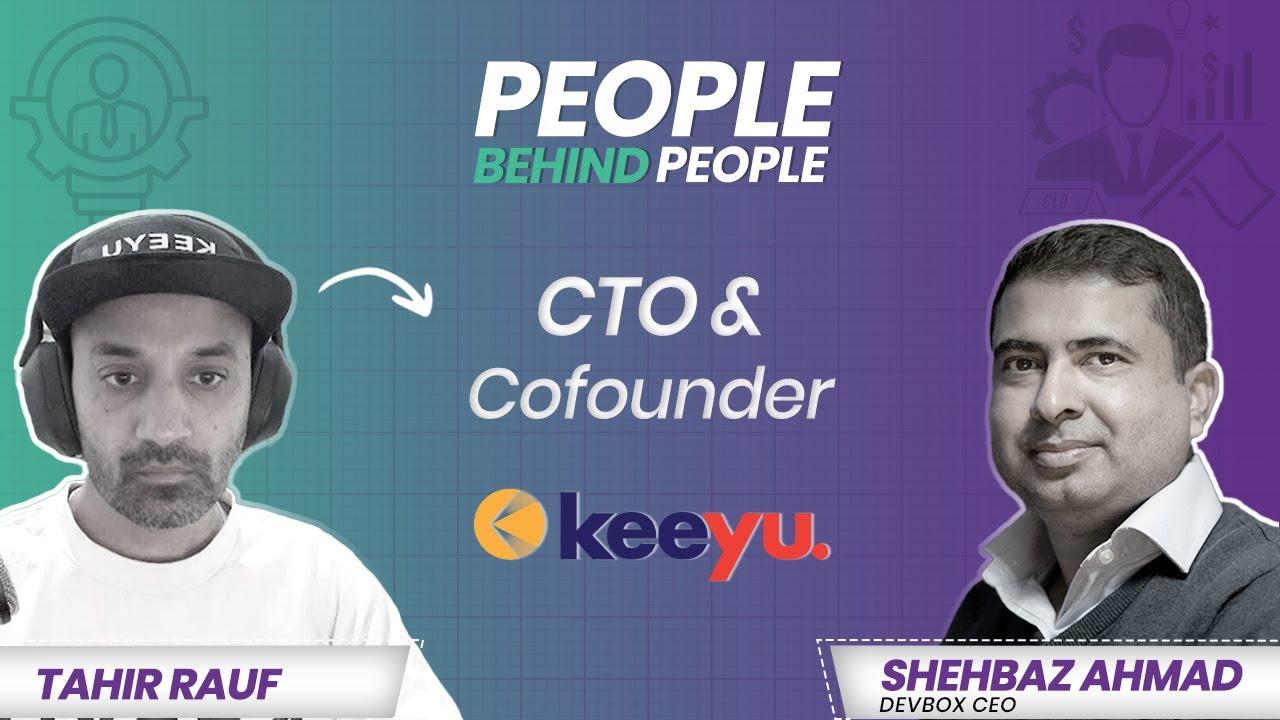
People Behind People
Journey
Not a CV. Four chapters that shaped how I build, and what each one taught me.
Lahore, Pakistan
Where I started
I grew up in Lahore, Pakistan, orphaned at four. I started programming before I had a computer, writing code with pen and paper, and working everything out by hand taught me to think clearly and keep things simple. Later I studied at FAST-NU, the National University of Computer and Emerging Sciences, and an idea I worked on made StartUp Cup Lahore’s Top 25 Ideas. It was digitalisation for farmers using localised SMS and IVR, the automated voice menus you reach with an ordinary phone call. It gave me a test I still use. Before I ask what a system can do, I ask who has to live with it, and whether they’ll understand it. Keeyu follows the same rule. It works inside the systems retailers already run.
What it taught me
Meet people in the systems they already use. Don’t make them come to yours.
Notes
Mastercard and Woolworths
Where it had to work
I worked on payments and retail systems at Mastercard and Woolworths. In businesses that size, a small fault reaches a lot of customers fast, so reliability comes first. At Mastercard I was a Solution Architect, and a production fix that delivered a 1000x performance gain earned me a Mastercard award. Systems at that scale need people who understand them end to end. That understanding is exactly what vibe coding lets teams skip, and it’s the part I’d protect first.
What it taught me
Ship only what you can explain.
Notes
Sydney, Australia
What I’m building
Today I’m co-founder and CTO of Keeyu in Sydney. We build AI that keeps e-commerce orders on track from checkout to delivery. My co-founders and I mapped 86 distinct problems in that stretch. We don’t automate chaos. We design the fix first, then we connect the tech. Our agents detect and act on order problems inside the systems retailers already run. Teams approve each workflow, and every agent action is transparent and reversible.
What it taught me
Agents can do the work. Only people can be accountable for it.
Notes
In writing and on podcasts
What I’m watching
AI made generating code, documents and strategy nearly free. It didn’t make reading, understanding or owning them any cheaper. Reverse Hallucination is people shipping AI output they never really read. Vibe Blur is what happens when throughput outruns understanding, a pattern I see across dozens of teams I talk to. The 9 Principles of Being a 10X Human is the other side: how to get the lift without losing the thread. I use AI constantly, and I’m not giving it up. But the teams that win won’t be the ones who generate the most. They’ll be the ones who still understand what they ship.
What it taught me
Never confuse volume with value.
Notes
One thread runs through all four: technology only counts when people can understand it, trust it and own it. For the ideas, start with the essays. For the long version of this story, invite me on your podcast.
On podcasts
People Behind People